1
Chẩn đoán
Đánh giá mức sẵn sàng làm Business Analyst
Chấm từng chiều kỹ năng và cho ra hồ sơ — biết mình đứng ở đâu trước.
Làm bài này Product Management
Customer discovery interviews từ beginner đến advanced: recruit đúng segment, hỏi theo Mom Test/JTBD, note-taking, synthesis, case studies, templates và decision workflow.
Đăng nhập để đánh dấu kỹ năng và theo dõi tiến độ.
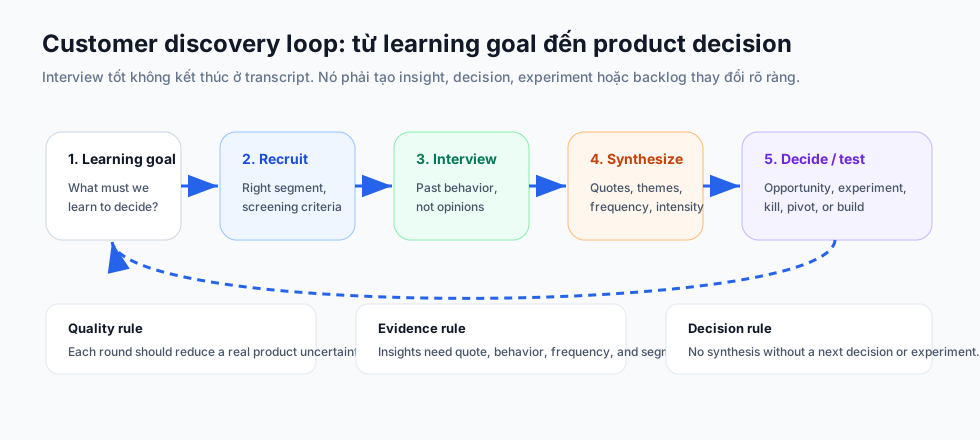
Customer discovery interview là cuộc trò chuyện có cấu trúc để hiểu đời sống, workflow, pain, workaround, motivation, constraint và buying behavior của customer trước khi team commit vào solution. Mục tiêu không phải là hỏi customer có thích ý tưởng của mình không. Mục tiêu là giảm product uncertainty bằng evidence từ hành vi thật.
Discovery interview tốt giúp PM/BA trả lời: problem này có thật không, ai đau nhất, họ giải quyết hiện nay bằng gì, pain có đủ lớn để đổi behavior không, decision criteria là gì, và insight này nên dẫn đến build, test, pivot, park hay kill.
| Roadmap wording | Nghĩa trong skill này | Artifact cần tạo | Bài tập thực hành |
|---|---|---|---|
| User Research | Hiểu user problem, context, motivation, alternatives, buying process và unmet needs. | Research plan, interview notes, synthesis report. | Interview 5 users trong một segment và cluster top 3 pains. |
| UX research | Hiểu usability, comprehension, task success, friction và mental model khi user tương tác với flow/prototype. | Usability test notes, task success metrics, friction map. | Run 3 task-based tests trên prototype và ghi lại confusion points. |
| Phỏng vấn users / User Interviews | Kỹ thuật core để khai thác hành vi quá khứ, pain, workaround và decision criteria. | Interview guide, consent note, transcript highlights, insight cards. | Viết script 10 câu theo Mom Test và phỏng vấn 3 người không quen. |
| Customer insights | Pattern có evidence đủ mạnh để thay đổi product decision. | Insight statement + evidence + impact + next decision. | Chuyển 20 raw notes thành 5 insights có priority. |
| Activity | Mục tiêu | Khi nào dùng | Không nên dùng để |
|---|---|---|---|
| Discovery interview | Hiểu problem, workflow, motivation, workaround, buying behavior. | Khi problem/segment còn chưa rõ. | Ask if they like your solution. |
| Survey | Quantify pattern sau khi đã có hypothesis. | Khi cần frequency, ranking, segmentation. | Khám phá problem mới từ đầu. |
| Sales call | Qualify opportunity và move deal. | Khi prospect đã có intent mua. | Thay thế research nếu conversation bị bias bởi selling. |
| Usability test | Kiểm tra task success, comprehension, friction của solution/prototype. | Khi đã có prototype/flow cần validate. | Chứng minh problem có đáng solve không. |
| Support ticket analysis | Tìm recurring pain từ production reality. | Khi product đã có users và support data. | Hiểu motivation sâu nếu không follow-up interview. |
| Field | Cần viết gì? | Ví dụ |
|---|---|---|
| Learning goal | Decision cần inform, không phải chủ đề chung chung. | Decide whether HR teams need candidate score explanation before using AI ranking. |
| Hypothesis | Điều team tin là đúng nhưng cần kiểm chứng. | Recruiters distrust AI scores unless they can see evidence from CV. |
| Target segment | Ai có pain mạnh nhất và context giống nhau. | Recruiters at 50-300 employee companies hiring 5+ roles/month. |
| Exclusion criteria | Ai không nên recruit vì sẽ làm nhiễu insight. | Agency recruiters, students, HR generalists hiring under 1 role/month. |
| Sample size | Số interview theo segment. | 5-8 users/segment, thêm nếu pattern chưa ổn định. |
| Key questions | Questions anchored in past behavior. | Walk me through the last time you screened 30+ CVs for one role. |
| Artifacts to collect | Evidence ngoài lời nói. | Screenshot workflow, spreadsheet, job scorecard, anonymized CV review notes. |
| Decision after research | Build/test/pivot/kill/park decision cần đưa ra. | Build score explanation MVP or first test with manual concierge workflow. |
Recruit đúng người quan trọng hơn interview thật nhiều người. Nếu recruit sai segment, synthesis sẽ cho insight sai.
| Screener question | Why it matters | Pass example | Reject example |
|---|---|---|---|
| Trong 30 ngày qua, bạn đã làm task này bao nhiêu lần? | Đảm bảo recent behavior, không phải memory xa. | Screened 120 CVs last month. | Did this once last year. |
| Bạn dùng tool/process nào hiện tại? | Xác định workaround và maturity. | Google Sheets + ATS + manual scorecard. | I am not involved in this process. |
| Ai quyết định mua/áp dụng solution? | Phân biệt user, buyer, approver. | Recruiting lead approves ATS tools. | I do not know. |
| Pain này ảnh hưởng tới metric nào? | Đo intensity và business impact. | Time-to-shortlist, candidate quality, interview no-show. | It is just annoying. |
| Bạn đã thử giải pháp nào? | Strong signal nếu họ đã tìm/bỏ tiền/workaround. | Paid for LinkedIn plugin; built spreadsheet formula. | Nothing, not a priority. |
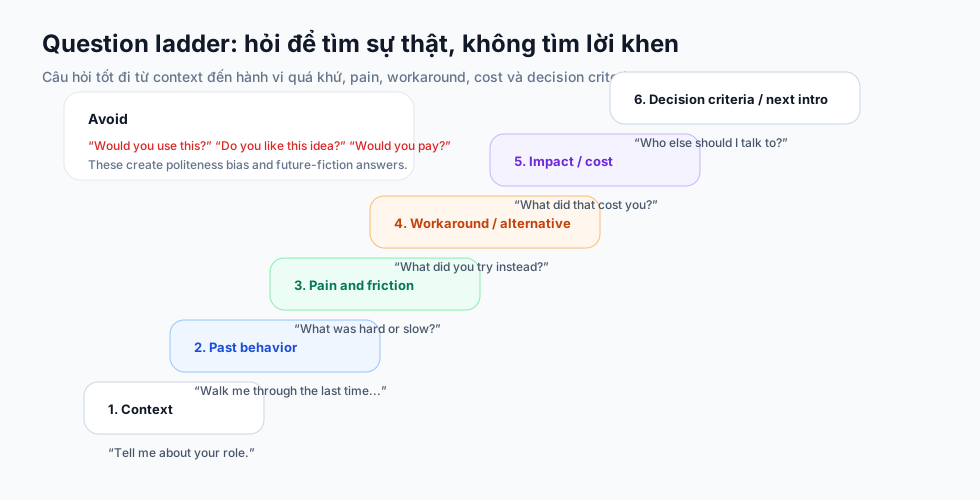
| Layer | Câu hỏi tốt | Signal cần nghe | Câu hỏi nên tránh |
|---|---|---|---|
| Context | Tell me about your role and when this problem shows up. | Role, frequency, situation, constraints. | Are you interested in productivity tools? |
| Past behavior | Walk me through the last time this happened. | Actual steps, tools, people involved. | Would you use a tool that does X? |
| Pain | What was hard, slow, risky or frustrating? | Emotion, friction, time lost, errors. | Is this a big problem? |
| Workaround | What did you try? What do you do today instead? | Excel, manual labor, paid tools, asking others. | Do you like our idea? |
| Impact | What happens if this is not solved? | Money, time, risk, churn, missed goal. | Would you pay $20/month? |
| Decision criteria | How would you decide whether to switch? | Buyer, approval, budget, trust, migration cost. | Should we build feature A or B? |
| Time | Section | Script / prompts | Output |
|---|---|---|---|
| 0-3 min | Consent and framing | “I am not selling today. I want to learn how you handle this. May I record for notes?” | Consent, relaxed context. |
| 3-8 min | Role/context | “Tell me about your role. How often do you deal with [task/problem]?” | Segment validation. |
| 8-20 min | Last time walkthrough | “Walk me through the last time this happened, step by step.” | Workflow, actors, tools. |
| 20-30 min | Pain and workaround | “What was hardest? What did you try? Where did it break?” | Pain, workaround, alternatives. |
| 30-37 min | Impact and priority | “What does this cost you? What happens if it stays the same?” | Intensity, urgency, metric. |
| 37-42 min | Decision criteria | “If you were to change tools/process, what would need to be true?” | Buyer, blocker, trust criteria. |
| 42-45 min | Close | “Who else should I talk to? What did I miss asking?” | Referrals, blind spots. |
| Bad question | Why weak | Better question |
|---|---|---|
| Would you use an AI tool for hiring? | Future opinion, politeness bias. | How did you screen candidates for your last hard-to-fill role? |
| Do you like this dashboard? | Design taste, not workflow. | What decision would this dashboard help you make faster? |
| Would you pay $50/month? | No context, weak signal. | What are you paying now to solve this, including tools and team time? |
| Should we build notifications? | Solution leading. | When do you realize something is stuck today? |
| Field | What to capture | Example |
|---|---|---|
| Participant | Segment, role, company/context, date. | P03, recruiter, 120-person SaaS company, hires 6 roles/month. |
| Raw quote | Exact words for emotional/important statement. | “I do not trust the score unless I can see why.” |
| Observed behavior | What they actually do, not just say. | Opens ATS, exports candidates to Google Sheets, manually highlights skills. |
| Pain | Friction, risk, cost, emotion. | Scorecard takes 8-12 minutes/CV; fear of rejecting good candidates. |
| Workaround | Current alternative/tool/manual process. | Spreadsheet formula and manual color coding. |
| Impact | Metric or consequence. | Shortlist delay causes hiring manager follow-up and missed candidates. |
| Interpretation | Your hypothesis, clearly labeled as interpretation. | Need explainability more than automated ranking. |
| Follow-up question | Question to resolve uncertainty. | What evidence would make a score trustworthy enough to use? |
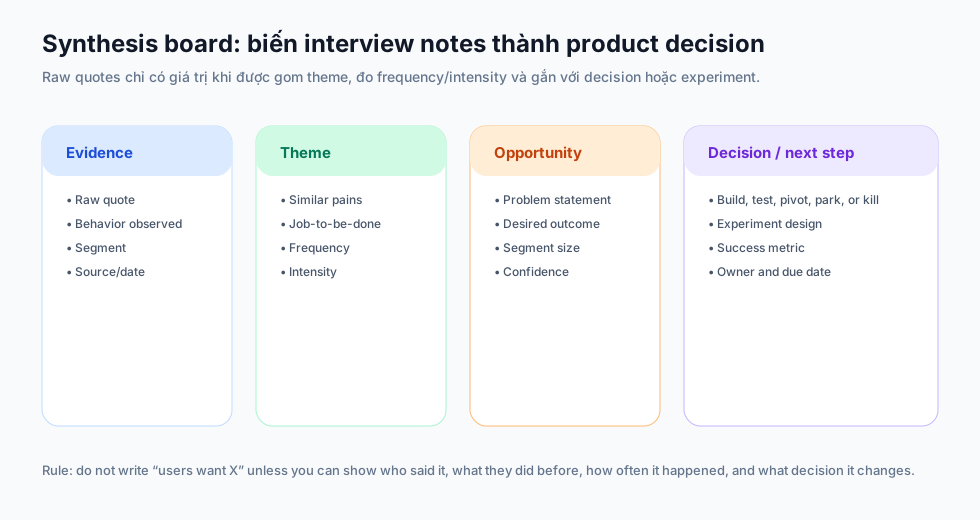
| Section | Format | Example |
|---|---|---|
| Insight | For [segment], [pain] happens when [context], causing [impact]. | For recruiters at mid-size companies, candidate scoring is not trusted when AI gives a number without evidence, causing manual review to continue. |
| Evidence | Quote + behavior + frequency. | 6/8 recruiters exported ATS data to Sheets; 5/8 asked for explanation before using score. |
| Current workaround | What they do today. | Manual scorecard and highlighting CV sections. |
| Opportunity | User outcome, not feature. | Help recruiters understand why a candidate matches role criteria in under 30 seconds. |
| Risks | What might be false. | Recruiters may say they need explainability but still not trust AI enough to act. |
| Next experiment | Small test before build. | Concierge test: manually generate score explanations for 20 CVs and measure usage/feedback. |
| Success metric | Observable decision criteria. | Recruiter uses explanation to shortlist/reject without opening original CV for 60% of low-risk cases. |
Business context: Team wants to build AI fit scoring for recruiters. Initial assumption: recruiters want automation to save time. Discovery shows the stronger pain is not only speed; it is trust and explainability.
| Discovery artifact | What was learned |
|---|---|
| Target segment | Recruiters hiring 5+ roles/month in companies with 50-300 employees. |
| Evidence | 6/8 recruiters used manual scorecards; 5/8 asked “why did the AI rank this candidate?” before trusting score. |
| Raw quote | “A score alone is dangerous. I need to show hiring manager the reason.” |
| Key assumption | Explainability increases trust enough for recruiters to use AI ranking. |
| Decision | Do not build ranking-only MVP. Test score explanation with evidence snippets from CV. |
| Experiment | Concierge prototype: manually produce fit explanation for 20 CVs and observe recruiter review behavior. |
| Success metric | Recruiter accepts or edits AI recommendation in under 2 minutes for 70% of candidates. |
Lesson: Discovery prevented a ranking-only feature. The better opportunity was explainable shortlist support.
Problem: Leadership asks for a “better dashboard”. Discovery interviews reveal that managers do not need more charts; they need early warning when renewals are at risk and a clear owner for next action.
Problem: Customers complain return process is confusing. Business thinks user wants “faster refund”. Interviews show the biggest anxiety is uncertainty: customers do not know whether their request was accepted, where the package is, or when money returns.
| Interview signal | Product implication |
|---|---|
| “I sent the item but do not know if they received it.” | Status tracking and notification requirement. |
| Customers screenshot chat with support. | Need clear return confirmation and case ID. |
| Support asks for the same order info repeatedly. | Return request should attach order, item, reason and evidence automatically. |
| High-value items require manual inspection. | Different flows for low-risk auto refund vs high-risk review. |
Lesson: Discovery changed the product from “refund faster” to “make return status trustworthy and visible”.
| Need | Tools | Artifact |
|---|---|---|
| Recruit and scheduling | Calendly, Google Form, Typeform, email, LinkedIn, Facebook groups, in-app prompt. | Screener form, participant list. |
| Interview and recording | Zoom, Google Meet, Riverside, phone call with consent. | Recording, transcript, consent note. |
| Transcription | Notta, Otter, Descript, Whisper-based tools. | Transcript with timestamps. |
| Synthesis | Miro, FigJam, Airtable, Notion, Dovetail. | Tagged notes, affinity map, themes. |
| Decision sharing | Notion, Confluence, Google Slides, Loom. | Opportunity memo, insight readout. |
Chấm từng chiều kỹ năng và cho ra hồ sơ — biết mình đứng ở đâu trước.
Làm bài nàyHọc kỹ năng này ở đâu?
Có 2 khóa dạy đúng phần này, miễn phí và bằng tiếng Việt.
Thảo luận & tài liệu thêm 0
Chia sẻ kinh nghiệm, đặt câu hỏi, hoặc đính kèm tài liệu/YouTube giúp người khác học kỹ năng này.